Navratri!
Navratri is one of the main celebrations in India. Worshipping Shakti- Amba, Durga, Kali, SarsWati, Gayatri or just called Maa - as Mother. The Sanskrit word Navratri is composed of joining two words: Nava + Ratri ‘nine nights’, Sanskrit language is very powerful ancient language, one can join words, one can make own words. About Sanskrit, some other time though!
Navratri is worshipping Shakti, literal meaning is Power. This nine-day period from the new moon day to the ninth day of Ashvina month is considered the most auspicious time of the Vikram Samvant year (Hindu Calendar) and is the most celebrated time of the year. Although it has different names in different parts of India, it is celebrated by Hindus from all regions. From Kashmir in the north to Tamil Nadu in the south, and from Gujarat in the west to Sikkim in the east, it is celebrated with great enthusiasm as the conquest of good over evil. Every region has its own myths and reasons to explain this.
The nine different aspects of Devi (Godess) or Shakti are worshipped over the nine days. These are the most popular forms under which she is worshipped: Durga: goddess beyond reach; Bhadrakali the auspicious power of time; Amba or Jagdamba: mother of the world; Annapurna: giver of food and plenty; Sarvamangala: auspicious goddess; Bhairavi: terrible, fearful, power of death; Chandika or Chandi: violent, wrathful, furious; Lalita: playful; and Bhavani: giver of existence. The festivities culminate on the tenth day, called variously Vijayadashmi, Dushehra or Dassain when people in most parts of the country burn effigies of Ravana, Meghanatha and Kumbhakarna (see also Dushehra). Some people fast on all nine days, eating only fruit and milk dishes. Some fast only on the eighth or ninth day.
 Maa Durga
 The nine-day period from the first to the ninth day in the bright fortnight of the month of Chaitra is also known as Navaratri and is dedicated to the worship of nine different aspects of Devi. These nine days are however, popular in north India only. The ninth day in this month is also celebrated as Ramanavami.
In Gujarat, People celebrate with Garba and Dandiya Raas celebration. There is an interesting history behind so called Garba or Dandiya. The word Garba is coming from (again) Sanskrit word Garbha + Deep. Garbha literally means womb or inside and Deep is a burning cotton wick in oil in an earthen dish, also known as Diya. This Deep is put inside an earthe pot with holes. In ancient times, garba was performed only by women. It is a form of praying Maa, Shakti or Devi. Women would form concentric circles around this earthen pot-Garbo with clapping and twirling with rythmic foot steps moving forward in a concentric circle at the rythm of prayers sang with traditional instruments- Dhol, sort of a two sided drum; quite different than what it is rightnow, entertainment!
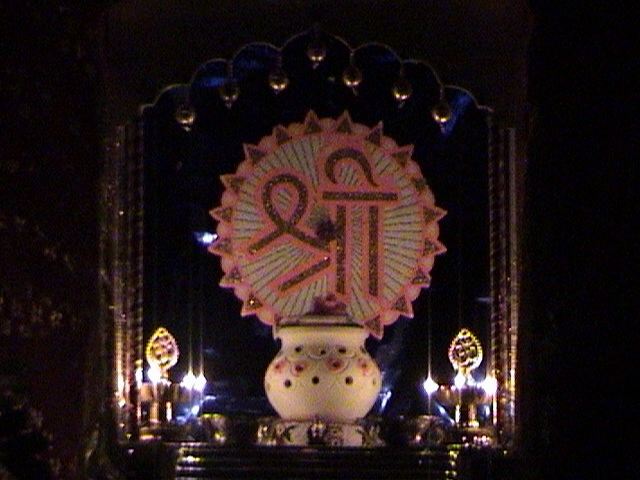
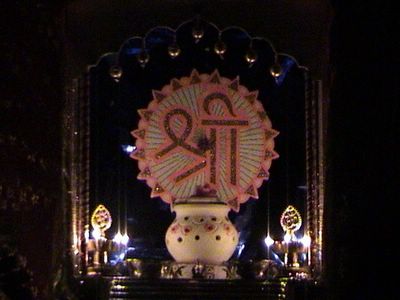 Garbo - an earthen pot with holes with diya inside
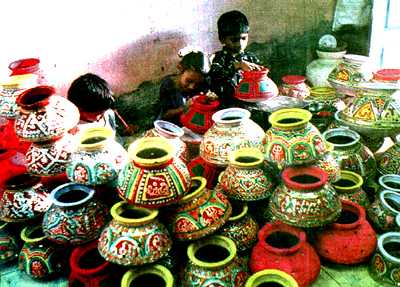
  Decorated Earthen Pots
 The purpose of Dandiya is very different than Garba, originating in western part of Inida. In ancient times, there were very small communities, and every male of the community was responsible for the security of entire community. Dandiya was also performed during navratri in western part of india. Dandiya raas was sort of a swords fight drill with intrigue footwork! Even now if you happen to see the very traditional Dandiya Raas, it would be performed by men only, and it is very energetic and physically very demanding. And now people perform dandiya raas at movie songs!! I would hope that the heart of these celebrations would still survive...
 My Contribution this Navaratri..
 I also tried contributing something this navratri, a free-hand drawing of "Maa"..